

Registered Pest Control Operator · Reg. No. P54412 · 30+ years, second-generation technician
One of the first questions we get asked is, “What’s making that scratching noise?” It’s a fair question, but the honest answer is: it depends on where you’re hearing it, and when. If it turns out to be rodents, here’s how to get rid of rats in Durban.
Scratching noises aren’t a diagnosis on their own. Every Durban home is different, every roof, wall cavity, and ceiling is built a little differently, and the noise that sounds like “something in the roof” can come from several very different pests. Understanding what affects the sound helps you know what you’re dealing with, and why one noise can mean very different things in different homes.
Hearing it right now? WhatsApp Mark or call 064 527 6227.
What Affects the Type of Noise You’re Hearing?
There isn’t a single answer because every scratching problem is unique. A few factors make the biggest difference.
- The location of the noise. Scratching in the ceiling is very different from scratching inside a wall cavity or under the floorboards. Some areas point straight to rodents, others point to birds, and some point to something more unusual altogether.
- The time of day. Noises that start up mostly at night often point to rats or mice, which are naturally more active after dark. Noises during the day are more likely to be birds, squirrels, or other daytime visitors that have found their way into your roof space.
- The type of sound. A quick scratching or scampering sound is different from a slow, heavy dragging sound, and different again from a soft fluttering. The size and behaviour of whatever is up there usually gives it away, once you know what to listen for.
- How long it’s been going on. A noise you’ve heard once or twice is very different from a noise that’s been happening every night for weeks. The longer an animal has had access to your roof or walls, the more established it usually is, and the more damage may already be underway.
Can You Identify the Pest Without an Inspection?
Sometimes, yes. For obvious cases, like fast scratching at night in the ceiling of a Durban home, we can often give you a good idea of what’s going on after asking a few questions about the sound and when it happens.
For less obvious cases, especially noises coming from inside walls, under flooring, or in hard-to-reach roof spaces, we usually recommend an inspection first. That allows us to confirm exactly what’s up there and where it’s getting in, instead of guessing.
We’d rather give you an honest answer than have you dealing with the same noise again a few weeks later.
Is Every Scratching Noise the Same Problem?
Not necessarily.
Like most things, there’s a difference between having something occasionally pass through your roof and having a full nesting problem settled in above your ceiling.
A single noise on one night might just be a rat passing through on its way somewhere else. Regular noise in the same spot, every night, usually means something has moved in and is comfortable staying.
Working out which one you’re dealing with matters, because the right response is very different depending on whether you’re dealing with a visitor or a resident.
What Should a Professional Inspection Include?
While every home is different, a proper inspection for scratching noises usually includes much more than a quick look in the roof.
- A thorough check of the ceiling, roof void, and any accessible wall cavities to locate where the activity is happening.
- Identification of the pest, whether rats, mice, birds, or something else, based on droppings, damage, nesting material, and entry points.
- An explanation of how the animal is getting in.
- A treatment or removal plan suited to what’s living in your roof, along with follow-up recommendations where needed.
Every home is different, which is why we tailor our approach instead of assuming the same thing is always to blame.
Not sure if it’s rats, mice, or a full rodent infestation? A professional inspection tells you exactly what you’re dealing with, first time. See our Rodent Control service.
Can You Deal With It Yourself First?
Sometimes, but not always.
For a single, one-off noise, keeping an eye and an ear out for a few nights may be all that’s needed. But when the scratching is regular, is coming from more than one area, or has been going on for a while, DIY traps and deterrents often only deal with part of the problem, because the entry point and any nesting are still there.
Many people only call a professional after the noise has been going on for weeks, or after they’ve noticed damage to insulation, wiring, or ceiling boards. By that stage, the problem is usually bigger than it would have been if it had been checked out early.
Attics and ceilings are among the more common origin points for home electrical fires, according to NFPA (National Fire Protection Association) data, alongside kitchens and bedrooms. Once rodents have been chewing wiring in a roof space for weeks, the ceiling cavity is exactly the kind of area where a fire like this can start.
How to Get an Accurate Assessment
The easiest way is to tell us:
- Where you’re hearing the noise (ceiling, wall, floor, or elsewhere).
- What time of day or night it happens.
- What the sound is like (scratching, scampering, dragging, or fluttering).
- How long you’ve noticed it happening.
- Whether it’s a home or a business.
The more information we have, the more accurate we can be with our advice, and the quicker we can get to the source of the problem.
If it turns out to be rats, our rat exterminator and rodent control service deals with the roof as well as the rats. If the timber itself is being eaten, look at wood borer treatment.
Scratching Noises at Home: What to Do Next
What’s causing the scratching noise in your home depends on where it’s coming from, when it happens, and how long it’s been going on.
Our goal isn’t to assume the worst or sell you a treatment you don’t need. It’s to identify what’s up there, deal with it properly, and help make sure it doesn’t come back.
If you’ve been hearing scratching in your ceiling, walls, or floors, give us a call or send us a voice note describing the sound. We’ll happily point you in the right direction.
Thank you, and God bless.
Mark Abraham Registered Pest Control Operator · Reg. No. P54412 · Structural Pest Control (Commercial & Domestic), Dept. of Agriculture, Act 36 of 1947
Hearing scratching and suspect rodents? We can confirm it and clear it out properly. Find out about rat and rodent control in Durban.
Frequently Asked Questions (FAQs)
What does scratching in the ceiling usually mean?
In most Durban homes, scratching in the ceiling at night points to rats or mice. Daytime scratching is more often birds or squirrels that have found a way into the roof space.
Why do I only hear the noise at night?
Rats and mice are naturally more active after dark, which is why scratching that starts once the house goes quiet is usually a sign of rodent activity rather than birds or other pests.
Is it rats or something else in my walls?
Scratching inside a wall cavity can be rats, mice, or occasionally other small animals that have squeezed in through a gap. An inspection is the only reliable way to confirm what’s in there without opening up the wall.
Is it dangerous to leave it and see what happens?
Left untreated, rodents can chew through wiring and insulation, which creates a fire risk, and they can contaminate ceiling spaces with droppings. The longer it goes on, the more damage tends to build up.
What should I do if I hear scratching tonight?
Note the location, the time it happens, and what the sound is like. That information helps us narrow down the likely cause before we even arrive, and makes the inspection quicker and more accurate.
You Might Also Like
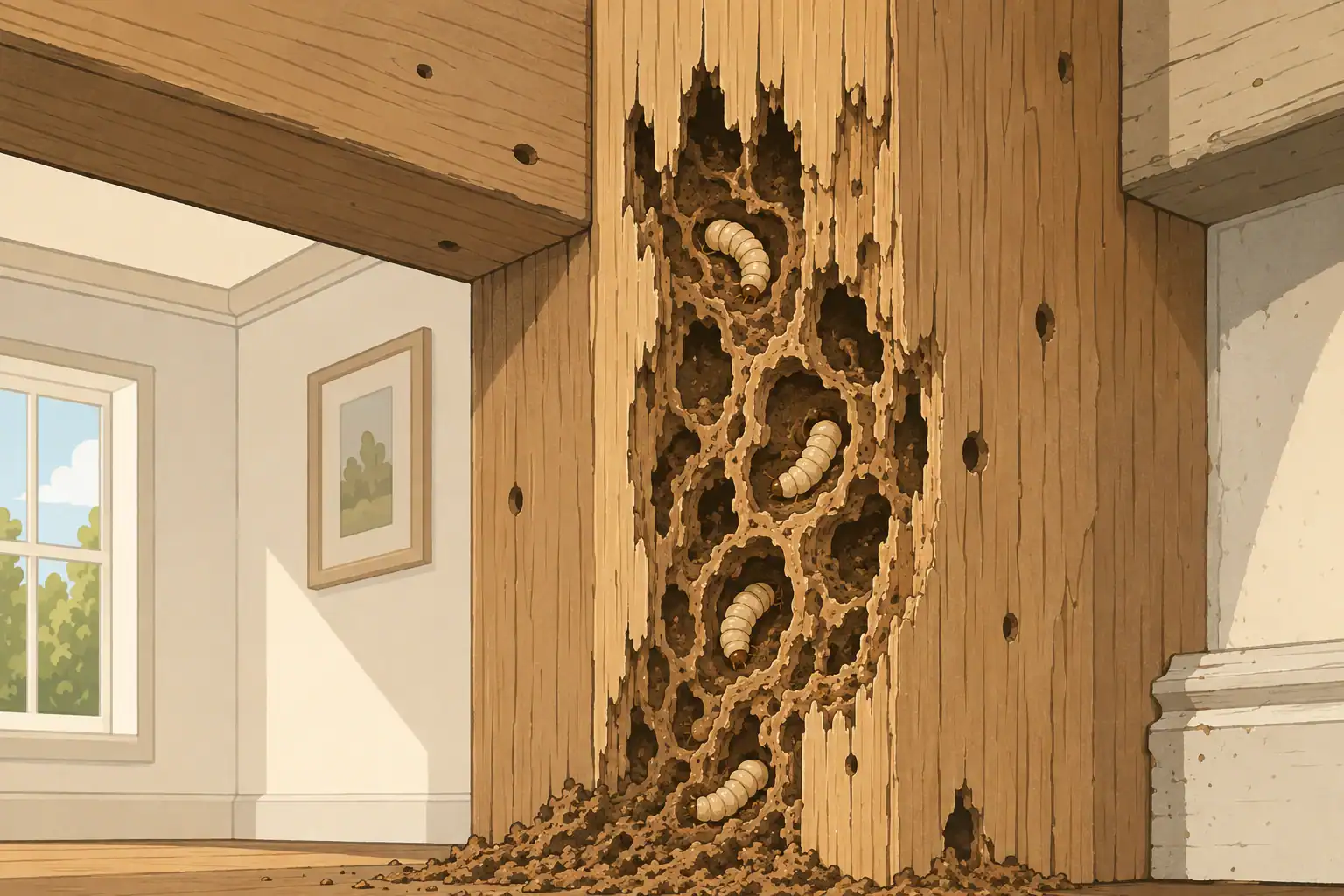
The Risks of Not Treating Wood Borer in Durban
What happens if wood borer damage is left untreated in a Durban home.
How to Deal With Wood Borer in Durban: What to Look For, and Why It’s Not a DIY Job
What to look for, and why wood borer isn’t a DIY job.

Do You Need Pest Control for Shongololos? Meaning, Myths and Facts
Whether that garden visitor is a pest, and what to do about it.