
Registered Pest Control Operator · Reg. No. P54412 · 30+ years, second-generation technician
From my experience as a pest controller who’s been in this business for decades, wood borer is one of the most prolific pests out there; but it’s also one of the most insidious.
Here’s the thing with wood borer: it can stay hidden for a long time. Often the only evidence you’ll see at first is a few small holes, or a little dust around your home.
But make no mistake: out of every pest I deal with day to day, wood borer has the greatest potential to cause serious damage.
Why Wood Borer Is So Hard to Catch
Part of what makes wood borer so dangerous is how patient it is.
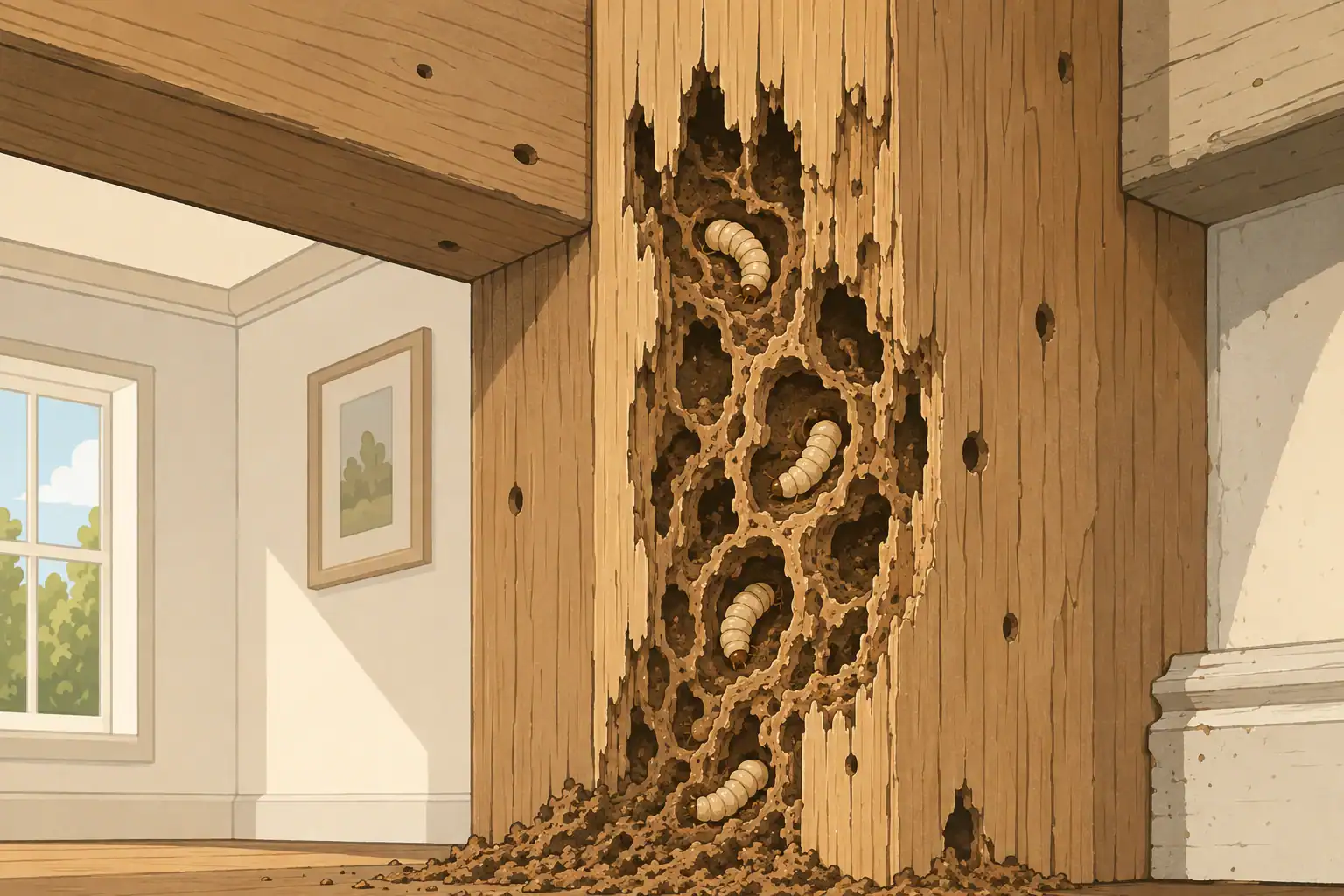
The beetle’s full life cycle, from egg to the point an adult finally emerges, can take three to four years. For almost all of that time, the damage is happening completely out of sight: the larvae are inside the timber, tunnelling through it from within.
You won’t see a beetle. You won’t hear anything. The only clue is that fine dust and those small exit holes, and by the time those actually show up, the infestation has usually been active for years already.
That’s exactly why I take it so seriously.
With most pests, what you see is roughly what you’re dealing with. With wood borer, what you see is the tail end of a problem that’s been quietly developing since long before you noticed it.
What Happens If You Leave It Untreated
If wood borer is left untreated, it progresses quite rapidly.
How fast depends on the size of the infestation and the type of timber involved. But the main concern for me, and for homeowners generally, is the roof trusses.
Once borer has eaten into the wood in your trusses, the risk of the roof caving in while you’re still living in the house becomes very real.
The Real Risk to Your Roof
If it reaches the point where the truss structure is significantly weakened, the entire roof may need to be replaced: and that’s a significant cost, whatever the size of the job.
At the end of the day, it’s not only far cheaper to get wood borer treatment done early, it’s also much safer.
Early wood borer treatment prevents the genuine risk of a collapsing roof, and the harm that could come to you or your family because of it.
Worried about your roof structure specifically? Early treatment is far cheaper than replacing damaged timber later. See how our Wood Borer Treatment works.
Get in Touch →Why an Entomologist Certificate Matters
This is also why I always encourage homeowners to take entomologist inspections seriously, not just as a box-ticking exercise.
An entomologist or beetle certificate confirms whether a property is free of wood-destroying insects like wood borer, and it’s not something I’d treat as optional.
It’s true these certificates aren’t a strict legal requirement everywhere in South Africa anymore. But in practice, they remain standard in property sales here in KwaZulu-Natal.
Buying or selling a home along our coast without one is a genuine risk, because banks will often still insist on one before approving a loan, and buyers are well within their rights to ask for one before they commit to a property. If wood borer is found after the fact, it can turn into a dispute nobody wants to be part of.
So whether you’re buying, selling, or simply want peace of mind about a home you already own, getting a proper inspection done is one of the simplest ways to catch this pest before it becomes a structural problem.
Why I’m Passionate About This
I’m passionate about this because I know firsthand how insidious wood borer can be.
It’s not a pest that announces itself. It works quietly, for years, in the one part of your home you’re least likely to inspect yourself.
That’s the whole reason early treatment and proper inspection matter so much. By the time wood borer is obvious, it’s already had a long head start.
Get a Free Quote →
Dealing with wood borer in your Durban home? We treat exactly this, every week. See how our Wood Borer Treatment works.
Get in Touch →Frequently Asked Questions (FAQs)
How do I know if I have wood borer in my home?
The most common signs are small, round exit holes in exposed timber (roof trusses, floorboards, furniture) and a fine, powdery dust called frass collecting beneath them. By the time these are visible, the infestation has usually been active for years.
Is wood borer actually dangerous, or just cosmetic damage?
It’s a genuine structural risk, not just cosmetic. Once borer has worked through enough of a roof truss, it weakens the timber to the point where the roof can be at real risk of caving in, especially under added load or in bad weather.
Why does wood borer go unnoticed for so long?
The beetle’s life cycle from egg to emerging adult takes three to four years, and almost all of that happens inside the timber, out of sight. There’s no visible sign until the adult beetle chews its way out, which is why early inspection matters so much.
Do I need a beetle certificate to sell my home in Durban?
It’s no longer a strict legal requirement everywhere in South Africa, but beetle certificates remain standard practice in property sales here in KwaZulu-Natal and the Western Cape. Banks will often still require one before approving a bond, and buyers are entitled to ask for one.
How often should I get my home inspected for wood borer?
For most homes, a check every few years is a sensible precaution, especially for older properties or homes with exposed timber roof structures. If you’re buying or selling, an inspection and certificate should happen as part of that process regardless of when the last one was done.
Is wood borer treatment safe for my family and pets?
Yes. We use registered, professional-grade products applied according to safety guidelines, and we’ll advise on any precautions specific to your home before treatment begins.
You Might Also Like
How to Deal With Wood Borer in Durban: What to Look For, and Why It’s Not a DIY Job
What to look for, and why wood borer isn’t a DIY job.

What Do Scratching Noises in Your Durban Home Actually Mean?
What that noise in your ceiling or walls is probably telling you.
How Much Does Pest Control Cost in Durban?
What actually affects the price of pest control in Durban.