

Registered Pest Control Operator · Reg. No. P54412 · 30+ years, second-generation technician
Umhlanga is one of the most beautiful stretches of coast we work on. It’s also one of the places where wood borer quietly does very well for itself.
Warm, humid air coming off the sea. Roof spaces nobody goes into. Apartments and holiday homes that stand empty for weeks at a time. Put those together and you’ve got a pest that can work away for years before anyone notices a thing.
If you live in Umhlanga, own property here, or look after a complex, this one’s worth understanding properly.
Rather have someone check your timber? WhatsApp Mark or call 064 527 6227.
Why Umhlanga Is Borer Country
Wood borer beetles lay their eggs in timber, and it’s the larvae that do the damage, tunnelling through the wood from the inside, out of sight. What they need most is moisture. And along our coast, there’s no shortage of it.
A few things make Umhlanga in particular a good home for them.
Coastal humidity. Even more so than inland Durban, homes close to the sea sit in damp air for most of the year. That moisture settles into roof voids and timber, which is exactly what borer larvae need to survive.
Older homes with original timber. Many of the older houses in Umhlanga Rocks and La Lucia still have their original roof trusses, floorboards and built-in joinery. Timber that’s been in place for decades, and may never have been properly treated, is far more vulnerable.
Newer builds aren’t automatically safe. The newer homes up on Umhlanga Ridge and in the Ridgeside estates are generally built with treated structural timber, which helps. But additions, decks, pergolas, cupboards and anything cut or added after the fact don’t always get the same treatment.
Homes that stand empty. Umhlanga has a lot of lock-up-and-go apartments and holiday homes. When nobody’s there for weeks at a time, nobody’s sweeping up the fine dust under a skirting board or noticing new holes in a cupboard door. That gives borer a very long head start. We cover where that leads in the risks of not treating wood borer.
Where We Find It Most in Umhlanga Homes
From the jobs we do in the area, these are the places I’d check first:
- Roof trusses and ceiling timbers. The most important place to check, and the one people are least likely to look at themselves.
- Timber decks and pergolas. Very common on sea-facing properties, and constantly exposed to moist air.
- Thatched lapas and entertainment areas. Found in a number of the estates, with plenty of exposed timber poles and beams.
- Built-in cupboards and skirting boards. Especially in older homes and ground-floor units where damp tends to collect.
- Antique or second-hand furniture. Borer can arrive in a piece of furniture and move into the timber around it.
Signs to Look For (Especially in Spring)
Here’s something worth knowing: adult beetles tend to emerge from the timber as the weather warms up. That means spring and early summer are often when fresh signs suddenly appear, even though the larvae have been working inside the wood for a long time before that. If you find them, here’s what to do about wood borer in Durban.
So if you’re going to have a proper look around your home, now is a good time to do it. Keep an eye out for:
- Small, round holes in timber, usually 1 to 2mm across and often in clusters
- Fine, powdery dust (frass) collecting beneath those holes, on floors, shelves or the top of skirting boards
- Wood that sounds hollow when you tap it
- Crumbling or soft edges on decking, cupboard doors or furniture legs
- Small beetles near windows or lights in the warmer months
If you’ve just come back to a holiday home or an apartment that’s been locked up, look for little piles of dust in particular. Nobody’s been there to clean them away, so they’re often easier to spot than in a home you live in every day.
Estates, Complexes and Body Corporates
This is where wood borer in Umhlanga gets a bit more complicated than it does in a freestanding house.
In a complex or estate, units often share a roof structure. If borer is active in the trusses above one unit, there’s a real chance it isn’t staying there. Treating one unit and ignoring the rest of the roof usually just means dealing with the same problem again later.
In most sectional title schemes, the roof structure is common property, so it usually falls to the body corporate rather than the individual owner. Every scheme is different though, so it’s worth checking your rules and raising it with your trustees or managing agent as early as possible.
A few things that help:
- Report it early. If you spot signs in your unit, let the trustees know rather than waiting to see if it gets worse.
- Inspect the whole structure, not just one unit. A single inspection of the shared roof tells you far more than several separate ones.
- Treat it as one job. One coordinated treatment is more effective, and usually a lot less hassle, than a piecemeal approach.
If you’re a trustee or managing agent, our Umhlanga Pest Control team works with estates, complexes and body corporates across the area, and we’re happy to talk through what a full-structure inspection would involve.
Managing a complex or estate in Umhlanga? One coordinated treatment protects every unit under the same roof. See how our Wood Borer Treatment works.
Buying or Selling in Umhlanga?
Umhlanga has one of the busiest property markets on our coast, and wood borer comes up in a lot of those sales.
Beetle certificates aren’t a strict legal requirement everywhere in South Africa anymore, but here in KwaZulu-Natal they’re still very much standard practice. Banks will often want one before approving a bond, and buyers are well within their rights to ask for one before they sign.
If you’re selling, getting an entomologist inspection done early means there are no surprises halfway through the transfer. If you’re buying, it’s one of the simplest ways to make sure you know what’s going on in the roof before the house is yours.
Either way, finding borer before a sale goes through is a lot better than finding it afterwards.
Buying or selling in Umhlanga? If an inspection turns up active borer, we can treat it properly so the sale can move forward. Find out about wood borer treatment in Durban.
If you’re selling a coastal home, our beetle certificates and pest control in Umhlanga cover the inspection and the paperwork in one visit.
Wood Borer in Umhlanga: What to Do Next
Wood borer is slow and quiet. In a home that stands empty half the year, it’s even quieter.
Umhlanga’s coastal climate gives it everything it needs, so if you own property here, it’s worth having a proper look, particularly in spring when fresh signs are most likely to show up.
If you’re seeing small holes, fresh dust or hollow-sounding timber, try our termite or wood borer checker, send us a photo or give us a call.
Thank you, and God bless.
Mark Abraham Registered Pest Control Operator · Reg. No. P54412 · Structural Pest Control (Commercial & Domestic), Dept. of Agriculture, Act 36 of 1947
Frequently Asked Questions (FAQs)
Is wood borer common in Umhlanga?
Yes. Umhlanga’s warm, humid coastal climate is exactly what wood borer larvae need to survive, and many homes here have exposed timber in roof spaces, decks and pergolas. Older homes in Umhlanga Rocks and La Lucia are particularly worth keeping an eye on.
Does sea air make wood borer worse?
The salt itself isn’t really the issue. It’s the humidity and moisture that come with living close to the sea. Damp timber in poorly ventilated roof spaces is far more attractive to wood borer than dry, well-ventilated wood.
Can newer homes on Umhlanga Ridge get wood borer?
They can. Newer builds generally use treated structural timber, which lowers the risk, but decks, pergolas, cupboards, additions and furniture don’t always get the same treatment. It’s still worth checking, especially any timber added after the house was built.
Who pays for wood borer treatment in a sectional title complex?
In most sectional title schemes the roof structure is common property, so it usually falls to the body corporate rather than the individual owner. Every scheme’s rules are different though, so check with your trustees or managing agent as early as possible.
When is the best time to check for wood borer in Umhlanga?
Any time is a good time, but spring and early summer are especially useful. Adult beetles tend to emerge as the weather warms up, so fresh holes and dust are more likely to show up then.
Do I need a beetle certificate to sell a home in Umhlanga?
It’s no longer a strict legal requirement everywhere in South Africa, but beetle certificates remain standard practice in property sales in KwaZulu-Natal. Banks will often still want one before approving a bond, and buyers are entitled to ask for one.
You Might Also Like
How to Deal With Wood Borer in Durban: What to Look For, and Why It’s Not a DIY Job
What to look for, and why wood borer isn’t a DIY job.
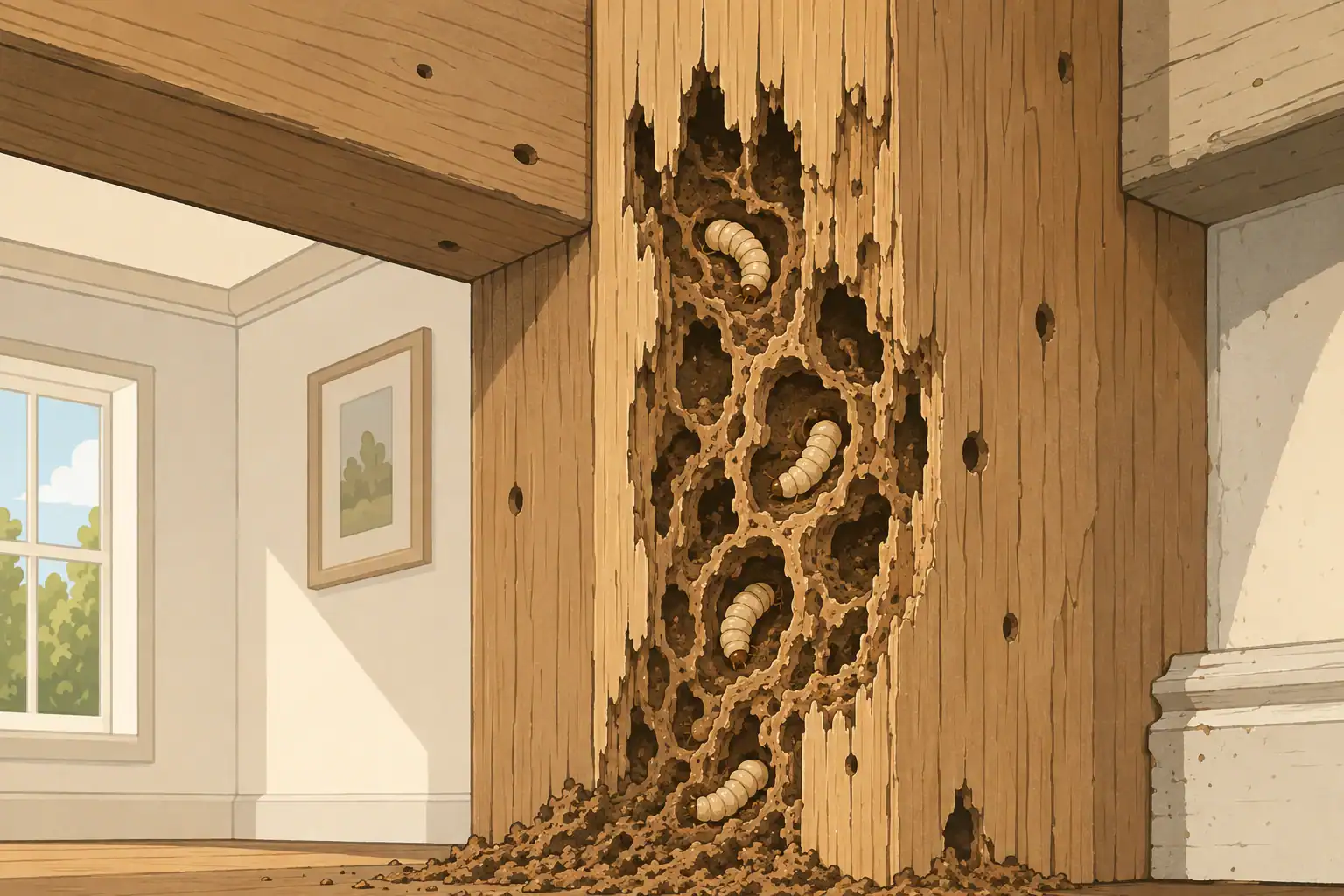
The Risks of Not Treating Wood Borer in Durban
Why leaving wood borer untreated puts your roof at risk.
How Much Does Pest Control Cost in Durban?
What affects the price of pest control in Durban.