
Registered Pest Control Operator · Reg. No. P54412 · 30+ years, second-generation technician
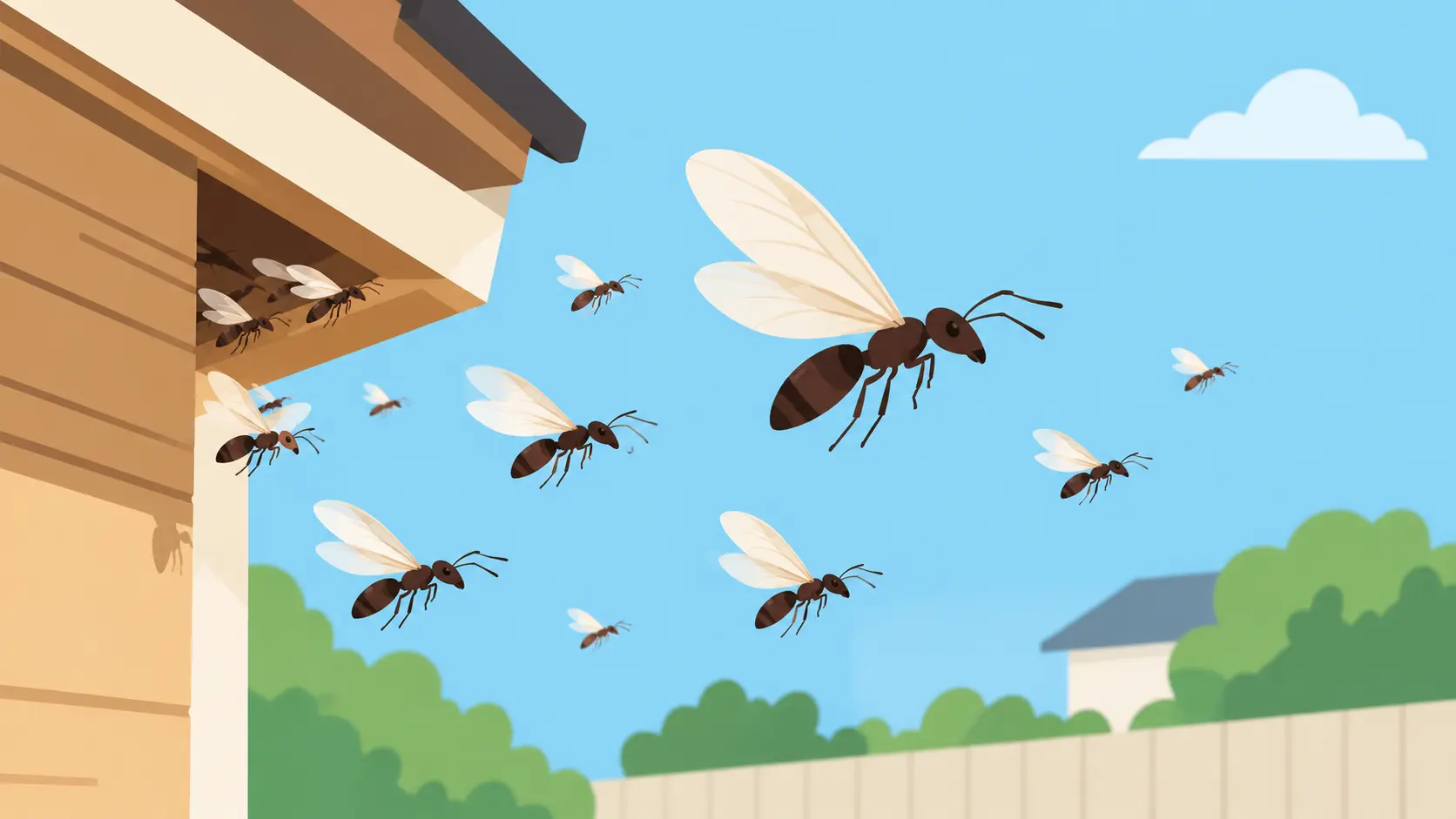
If you’ve lived in Durban for more than one summer, you’ve seen it. The first proper storm of the season rolls through, the air goes heavy and still, and by the time it gets dark the outside light is covered in hundreds of winged insects. They’re on the windows, a few have found their way into the lounge, and one or two are floating in the dog’s water bowl. By morning they’ve vanished, and all that’s left is a drift of little papery wings on the floor.
Worried it’s termites? WhatsApp Mark or call 064 527 6227.
Most people call them flying ants. A lot of the time they’re termites. One of those is a nuisance for an evening, and the other could be working on your skirting boards, so it’s worth knowing which one you’ve got.
Let’s talk about what you’re looking at.
What Flying Ants Are
“Flying ants” are the winged breeding members of a colony. The proper name is alates, and both ants and termites produce them. Once a colony is big and established enough, it sends out a batch of winged males and females to pair up and start new colonies somewhere else. That flight has a lovely name: a nuptial flight.
Very few of them make it. Birds, geckos, frogs and your porch light take care of most. The handful of pairs that land safely snap off their own wings, find a bit of damp soil or timber, and get to work on a brand-new colony. That’s why you find all the loose wings the next morning.
Why They Come Out After Rain
They wait for very particular conditions: warm, humid air, hardly any wind and soft, wet ground. Along our coast that usually lines up with the first heavy rains of the season, from roughly late September into December, with smaller flights after later storms.
The rain softens the soil so a new pair can dig in. The humidity keeps them from drying out, which matters, because they’re soft-bodied and fragile. Every colony in the area is responding to the same weather, so they all tend to fly on the same evening. That’s why it feels like they came out of nowhere.
As a pest control specialist in Durban, people often ask me how long it lasts. A single flight is usually over in a few hours, often starting late afternoon or just after dark. You might get a couple more before summer’s done.
Flying Ants vs Termites: How to Tell the Difference
Catch one under a glass with a piece of paper and have a proper look. Your phone camera on zoom helps a lot here.
| What to check | Flying Termite | Flying Ant |
|---|---|---|
| Waist | Thick and straight, the body looks like one tube | Narrow and pinched, like an hourglass |
| Antennae | Straight, like a string of tiny beads | Bent at an elbow |
| Wings | Two pairs the same length, much longer than the body | Front pair clearly bigger than the back pair |
| What gets left behind | Piles of loose wings, because they snap off easily | Very few wings, ants tend to keep theirs longer |
| What it usually means | A termite colony nearby, possibly in or under the house | An ant nest in the garden or walls, usually a simpler fix |
For most people, the wings are the giveaway. If you’re sweeping up drifts of them near the windowsills, door frames or under the lights in the morning, you’ve almost certainly had termites flying.
Finding piles of wings inside the house rather than outside? That’s worth a proper look. See how our Termite Treatment works.
Should You Be Worried?
I’ll be straight with you: it depends almost entirely on where they came from.
If you watched them come up out of the lawn, a flowerbed or a crack in the paving and head for your lights, there’s a mature colony somewhere in the garden or next door. That isn’t an emergency. It is worth knowing about, though, because a colony that close can eventually work its way to your foundations or to anything wooden stored up against the house.
If they were coming out of gaps in the skirting boards, cracks in the floor, a door frame or a built-in cupboard, that’s a different story. It usually means there’s an established colony in or under the house, feeding on timber you can’t see.
Take a closer look if you’re also noticing any of these:
- Thin mud tubes, about the width of a pencil, running up walls, foundations or the edge of the slab
- Skirting boards or door frames that sound hollow or feel papery when you press them
- Paint bubbling or peeling for no obvious reason
- Doors or windows that have suddenly started sticking
Any of those alongside an indoor swarm is your sign to book an inspection.
What to Do Tonight
You don’t need to reach for a can of Doom. The swarm will be over in a few hours, and spraying the flyers does nothing at all to the colony they came from. Here’s what I’d do instead:
- Switch off the outside lights and close the curtains. They fly straight for light, so a lit room pulls them in.
- Keep the windows and doors shut until it dies down.
- Vacuum up whatever gets inside, and empty the canister outside.
- Look before you sweep. In the morning, check where the wings have gathered. A big pile by one skirting board or cupboard is a clue, so take a photo of it.
- Keep one. Pop an insect into a small jar or a zip-lock bag. It makes identification much easier if you do end up calling someone.
Getting Rid of Them Properly
The flyers are only the messengers. If you want the problem sorted, the colony is what needs dealing with.
If it turns out to be ants, a good bait placed along their trails usually does the job. The workers carry it back to the nest, and the colony collapses from the inside. Our Ant Treatment page covers the ants we see most in Durban homes.
Termites are a bigger job. A subterranean colony can sit a long way underground and spread over a wide area, so nothing from the shop is going to reach it. A proper treatment means applying a registered termiticide to the soil around and under the building to form a barrier, then treating any damaged timber directly. Done right, it protects the structure for years, and you get paperwork you can use if you ever sell the house. You can read more on our Termite Treatment page.
Flying Ants or Termites: What to Remember
A cloud of flying ants on a muggy Durban evening is just part of summer here. Most of the time they’re termites looking for somewhere new to live, and most of the time they’ve come from the garden.
What matters is where they came from. If it was outside, keep an eye on it. If it was inside, or you’ve found mud tubes or hollow timber to go with it, have it looked at before the colony does real damage.
If you’re not sure which one you’re dealing with, send us a photo on WhatsApp or book an exterminator in Durban to come and have a look. We’d rather tell you it’s nothing than have you find out the hard way when a door frame gives in. If you’ve also spotted damaged timber, our termite or wood borer checker will help you work out what’s behind it.
Thank you, and God bless.
Mark Abraham
Registered Pest Control Operator · Reg. No. P54412 · Structural Pest Control (Commercial & Domestic), Dept. of Agriculture, Act 36 of 1947
Seen them coming out of the skirting boards or the floor? Don’t wait for the damage to show. Find out about termite treatment in Durban.
Frequently Asked Questions (FAQs)
Why are there suddenly so many flying ants?
Colonies across a whole area fly at the same time when the weather is right, usually a warm, humid evening after heavy rain. That’s why thousands can appear within an hour and be gone by morning.
What are flying ants in South Africa?
Many of the “flying ants” people see in South Africa after the summer rains are winged termites, called alates. You can tell them apart from ants by the straight waist, straight antennae and four wings of equal length.
How long do flying ants last?
A single flight is usually over in a few hours, often starting late afternoon or just after dark. You may see a few more flights during the season as more storms come through.
Do flying ants bite?
Flying termites can’t hurt you. They have no sting and they’re only interested in finding a mate. Some winged ants can give a small nip if you handle them, but it’s rare and harmless.
Do flying ants mean I have termites in my house?
Not necessarily. If they flew in from outside, the colony is most likely in the garden or on a neighbouring property. If they came out of skirting boards, floors or walls, there’s a good chance the colony is in or under the house, and an inspection is worth it.
Will killing the flying ants get rid of them?
No. The winged ones are leaving the colony anyway, and most die within a day. The nest they came from stays active unless it’s treated directly.
Are flying termites dangerous to pets?
No. They’re harmless to cats and dogs, and plenty of dogs treat a swarm as a free snack. The only real risk is from any spray you use on them, which is another good reason to leave the Doom in the cupboard.